- News
- entertainment
- bengali
- movies
- Celebs share the stories behind their favourite heirloom jewellery
Trending
This story is from October 15, 2022
Celebs share the stories behind their favourite heirloom jewellery

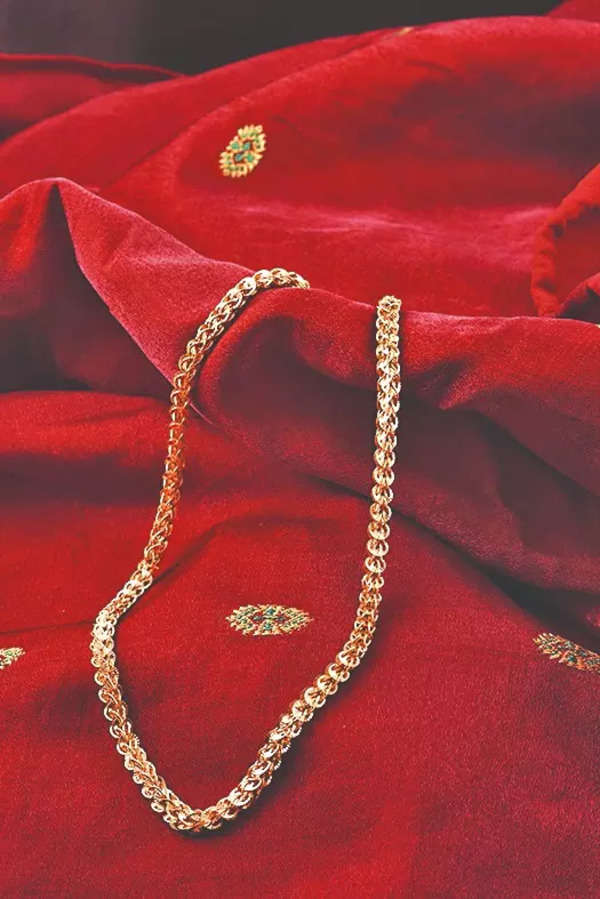
From guinea pendants to butterfly chokers and gold bangles — heirloom jewellery that has traversed generations — continues to be cherished possessions of those who have inherited them. From festivals, weddings and special occasions — these not just add a touch of royalty to trendy, new-age ensembles, but also evokes a host of emotions. Ahead of Dhanteras, Tollywood celebs talk about heirloom jewellery that they have come into possession of through generations, the stories behind them and how they style them in today’s day and age. Read on...

My great-grandmother’s butterfly choker is my prized possession: Ritabhari Chakraborty
My great-grandmother (boro dida) belonged to Muktagacha and they were Acharya Chowdhury's - zamindars helming from the Muktagacha Rajbari. She received this projapoti (butterfly) choker as a wedding gift almost 100 years ago. When the partition happened, she had to flee with her husband and children to West Bengal as the house and everything were under attack. She brought whatever she could pack in a small bundle with her, and this choker came with her too. She gifted this to my grandmother for her wedding and she wore this during the ceremony. My mother and aunt inherited her jewellery when she passed away. I wanted to keep this choker for myself as for me it's not just a piece of jewellery but the history and proof of where we come from and who we are. Today, Muktagacha Rajbari is a museum in Bangladesh with a broken, revolving stage that used to stand in glory back in its time and the Acharya Chowdhury’s are scattered everywhere. But I have this choker that is a testimony of the legacy of our family. The choker is made of gold with tiny pearls embedded in them. The wings of the butterfly and body are embedded with opal, diamond and ruby. Back then, these were custom-made and the intricate design proves the artisan's artistry in making it. In our family we all have worn it once at least in our lives - my aunt at her wedding, my mother at her first photoshoot, my sister on her engagement day and me for this shoot for Calcutta Times! Every year, on Dhanteras, I take my mother and aunt to a jewellery shop so they can choose and buy their choice of jewellery. It is my gift to them. I buy something for myself too as buying jewellery on Dhanteras is considered auspicious.
I always gravitate towards my mother’s gold and ruby choker: Ekavali
Every heirloom has a story; amongst the jewellery I have inherited my favourite is a gold and ruby choker with pearls that my dad gave my mum when she moved to Kolkata from Goa after they got married. I haven't seen my mother since I lost her at birth, so whenever I wear this choker, it warms my heart to think that I am wearing something she once wore. It's a happy-sad feeling that is hard to put into words. It may not be the most expensive piece of jewellery I own but it is certainly the most precious. Perhaps, for sentimental reasons, I always gravitate towards this ruby set. At a wedding, I will wear the choker, the earrings and the bangle and perhaps at a party, I will just wear the earrings. In an age where people like wearing trendier designs, I like to stick to my classic heirlooms.
I cherish my great-grandmother’s gold choker and a matching pair of earrings : Swastika Dutta:
I have inherited a lot of my great-grandmother’s jewellery, but the most cherished piece of all is this gold choker and a matching pair of earrings with stone detailing featuring a deity in the middle. I heard from my mother that my great-grandmother loved decking up in jewellery and had a brilliant collection of jewellery and saris. She gave this gold choker to my grandmother on her wedding night. My grandmother then passed this jewellery on to my mother on her ashirbaad day. I love the design of this choker and I wear it during almost all festivals. This choker is not just a piece of jewellery but an emotion in itself. I plan to wear it on my wedding day. I wear the jhumkas with a white shirt and denims so it can take centrestage. On Dhanteras, it is a ritual for me to buy something as the basic idea behind Dhanteras shopping is that if you invest in something on this day, what you get back eventually will be of a much higher value. Because of the pandemic, I bought only silver coins the last two years, but this year, I plan to buy gold bangles as I have been saving money for it.
My pishi’s necklace and bangles are my favourites : Adrija Roy
I treasure the gold necklace and a pair of bangles that my pishi gifted my mother on her 25th marriage anniversary. My pishi is a spinster and she used to consider my mother as her daughter. My mother eventually gifted me the necklace and bangles on my 20th birthday and it is very dear to me. Ma told me that the necklace belonged to my pishi’s mother, so it has traversed generations. One of the small jhumkas is missing from the necklace but I didn’t repair it either since I want to keep the necklace as it is. I fear the polish and design won’t match. No matter what jewellery I am gifted or buy later in my life, this one and the bangles will always be my most prized possession. I don’t wear this necklace very often because it is heavy, and I always fear something will happen to it! The jewellery is so old but the design looks so trendy. This year, I have asked ma to buy me a pair of earrings that match this neckpiece.
Stylist's quote:
Neel Saha: It is said, fashion is a cycle. Classics keep revolving time after time. With trends going global and recycled, old-school has replaced new designs. Pulling out jewellery grandma's goynar baksho and matching it with latest sartorial styles — it is always fun to bring two generations together. Vintage chokers to bauti and that exclusive guinea haar — they all are the perfect pieces to style the modern-age girl.
1. Pair a white shirt with a pleated golden skirt. Punch it with white sneakers, while flaunting the traditional guinea pendent with a traditional bichhe haar. A linen dress or a sari in solid-colour would look nice with kaan pasha and a pair of mantashas on both arms.
2. Pair a stunning red polymer lehenga with a stunning choker and kaan cuffs or what we traditionally call kaan badhano.
3. This Diwali, layer up a saath nori haar or a sita haar, with lohori and a choker with an ivory gold Kanjeevaram sari with a deep neck blouse.
PIX: Anindya Saha and Siladitya Dutta
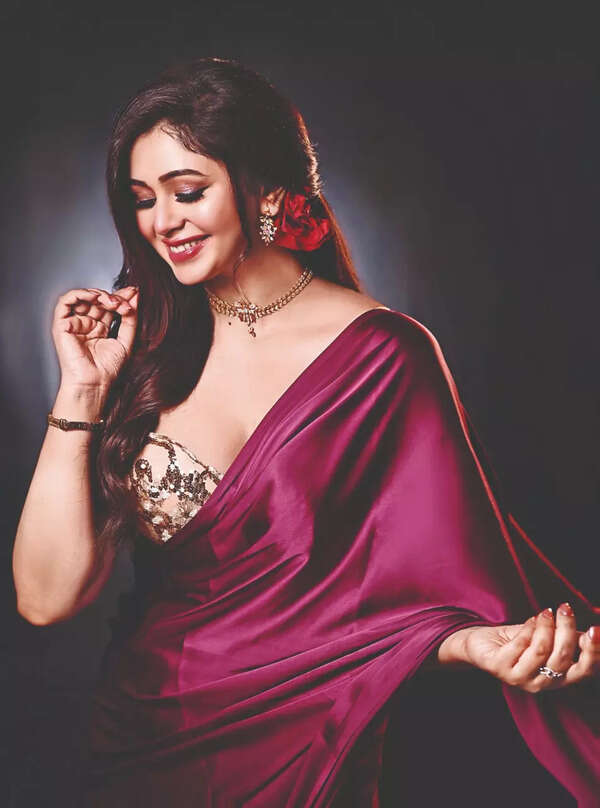
My great-grandmother’s butterfly choker is my prized possession: Ritabhari Chakraborty
My great-grandmother (boro dida) belonged to Muktagacha and they were Acharya Chowdhury's - zamindars helming from the Muktagacha Rajbari. She received this projapoti (butterfly) choker as a wedding gift almost 100 years ago. When the partition happened, she had to flee with her husband and children to West Bengal as the house and everything were under attack. She brought whatever she could pack in a small bundle with her, and this choker came with her too. She gifted this to my grandmother for her wedding and she wore this during the ceremony. My mother and aunt inherited her jewellery when she passed away. I wanted to keep this choker for myself as for me it's not just a piece of jewellery but the history and proof of where we come from and who we are. Today, Muktagacha Rajbari is a museum in Bangladesh with a broken, revolving stage that used to stand in glory back in its time and the Acharya Chowdhury’s are scattered everywhere. But I have this choker that is a testimony of the legacy of our family. The choker is made of gold with tiny pearls embedded in them. The wings of the butterfly and body are embedded with opal, diamond and ruby. Back then, these were custom-made and the intricate design proves the artisan's artistry in making it. In our family we all have worn it once at least in our lives - my aunt at her wedding, my mother at her first photoshoot, my sister on her engagement day and me for this shoot for Calcutta Times! Every year, on Dhanteras, I take my mother and aunt to a jewellery shop so they can choose and buy their choice of jewellery. It is my gift to them. I buy something for myself too as buying jewellery on Dhanteras is considered auspicious.
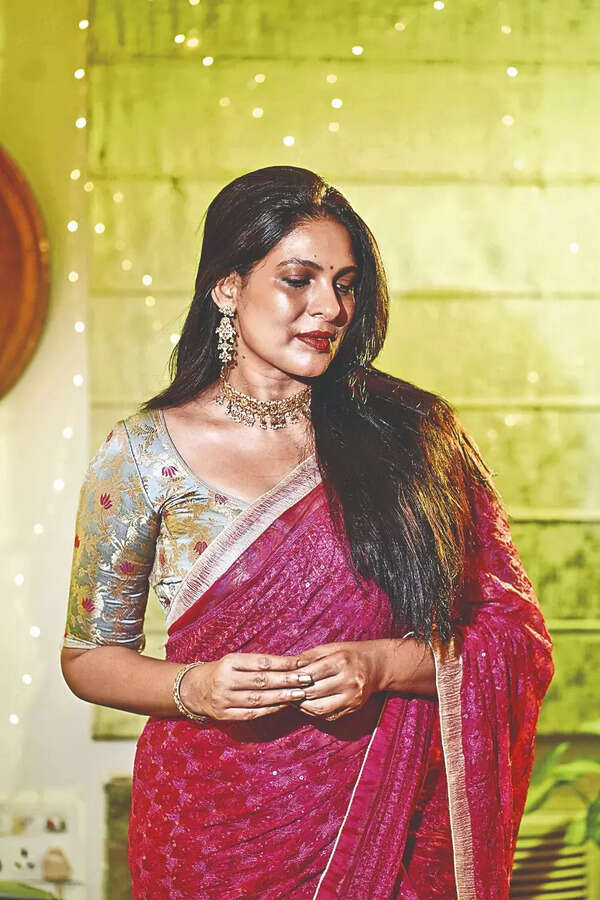
I always gravitate towards my mother’s gold and ruby choker: Ekavali
Every heirloom has a story; amongst the jewellery I have inherited my favourite is a gold and ruby choker with pearls that my dad gave my mum when she moved to Kolkata from Goa after they got married. I haven't seen my mother since I lost her at birth, so whenever I wear this choker, it warms my heart to think that I am wearing something she once wore. It's a happy-sad feeling that is hard to put into words. It may not be the most expensive piece of jewellery I own but it is certainly the most precious. Perhaps, for sentimental reasons, I always gravitate towards this ruby set. At a wedding, I will wear the choker, the earrings and the bangle and perhaps at a party, I will just wear the earrings. In an age where people like wearing trendier designs, I like to stick to my classic heirlooms.
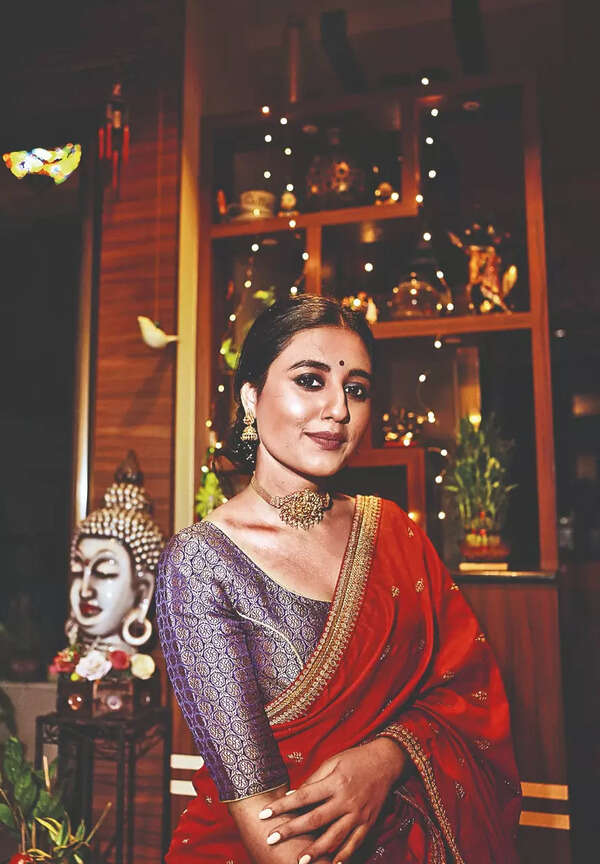
I cherish my great-grandmother’s gold choker and a matching pair of earrings : Swastika Dutta:
I have inherited a lot of my great-grandmother’s jewellery, but the most cherished piece of all is this gold choker and a matching pair of earrings with stone detailing featuring a deity in the middle. I heard from my mother that my great-grandmother loved decking up in jewellery and had a brilliant collection of jewellery and saris. She gave this gold choker to my grandmother on her wedding night. My grandmother then passed this jewellery on to my mother on her ashirbaad day. I love the design of this choker and I wear it during almost all festivals. This choker is not just a piece of jewellery but an emotion in itself. I plan to wear it on my wedding day. I wear the jhumkas with a white shirt and denims so it can take centrestage. On Dhanteras, it is a ritual for me to buy something as the basic idea behind Dhanteras shopping is that if you invest in something on this day, what you get back eventually will be of a much higher value. Because of the pandemic, I bought only silver coins the last two years, but this year, I plan to buy gold bangles as I have been saving money for it.
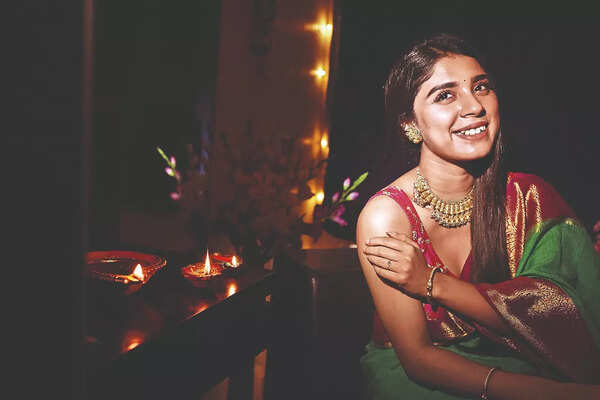
My pishi’s necklace and bangles are my favourites : Adrija Roy
I treasure the gold necklace and a pair of bangles that my pishi gifted my mother on her 25th marriage anniversary. My pishi is a spinster and she used to consider my mother as her daughter. My mother eventually gifted me the necklace and bangles on my 20th birthday and it is very dear to me. Ma told me that the necklace belonged to my pishi’s mother, so it has traversed generations. One of the small jhumkas is missing from the necklace but I didn’t repair it either since I want to keep the necklace as it is. I fear the polish and design won’t match. No matter what jewellery I am gifted or buy later in my life, this one and the bangles will always be my most prized possession. I don’t wear this necklace very often because it is heavy, and I always fear something will happen to it! The jewellery is so old but the design looks so trendy. This year, I have asked ma to buy me a pair of earrings that match this neckpiece.
Stylist's quote:
Neel Saha: It is said, fashion is a cycle. Classics keep revolving time after time. With trends going global and recycled, old-school has replaced new designs. Pulling out jewellery grandma's goynar baksho and matching it with latest sartorial styles — it is always fun to bring two generations together. Vintage chokers to bauti and that exclusive guinea haar — they all are the perfect pieces to style the modern-age girl.
1. Pair a white shirt with a pleated golden skirt. Punch it with white sneakers, while flaunting the traditional guinea pendent with a traditional bichhe haar. A linen dress or a sari in solid-colour would look nice with kaan pasha and a pair of mantashas on both arms.
2. Pair a stunning red polymer lehenga with a stunning choker and kaan cuffs or what we traditionally call kaan badhano.
3. This Diwali, layer up a saath nori haar or a sita haar, with lohori and a choker with an ivory gold Kanjeevaram sari with a deep neck blouse.
PIX: Anindya Saha and Siladitya Dutta
About the Author
Ruman GangulyEnd of Article
FOLLOW US ON SOCIAL MEDIA





entertainment videos
Featured In Movies
Popular Categories
Entertainment NewsBollywood NewsTollywood NewsKollywood NewsMollywood NewsMovie ReviewsLatest Hindi MoviesLatest Tamil MoviesMX PlayerParenting TipsHome RemediesWeight LossBeauty TipsParenting TipsHindi VideosHindi Video SongsBhojpuri Music VideosLatest Telugu MoviesBhojpuri Music VideoHindi TV News
Trending in Entertainment
Latest MoviesBollywood MoviesHollywood MoviesTamil Movies 2024Telugu Movies 2024Malayalam Movies 2024Kannada Movies 2024Marathi Movies 2024Bengali Movies 2024Top Rated Movies 2024Best Hindi MoviesBest English MoviesBest Telugu MoviesBest Tamil MoviesBest Malayalam MoviesBest Kannada MoviesBest Bengali MoviesUpcoming Hindi MoviesBest Movies Of All TimeBest Hindi Movies of All Time
Trending in Etimes
Horoscope TodayNumerology Predictions TodayDinner With TrumpTim WalzIvanka TrumpJose LopezKristina JoksimovicJoe WilsonTrump Eating The Dogs SongGermany NewsKamala HarrisPrince HarryPatriot Day 2024Diabetes RiskHappy Mindfulness Day 2024Trump Vs HarrisJoe JonasPositive Thinking Day 2024Dave Bautista
Trending in TV
Trending in Lifestyle
Trending in Regional
Movie Reviews
Visfot ReviewThalapathy Is The G.O.A.T ReviewRebel Ridge ReviewDetective Conan vs. Kid the Phantom Thief ReviewBeetlejuice Beetlejuice ReviewPad Gaye Pange ReviewA Wedding Story ReviewThe Diary Of West Bengal ReviewTikdam ReviewKinds Of Kindness ReviewAfraid ReviewThe Deliverance ReviewBlue Lock: Episode Nagi ReviewDaddio Review
Upcoming Hindi Movies
Upcoming Regional Movies
Latest News
7. Hindi becomes officialKitchen Tips: How to elevate home cooking to Michelin levelJulie Chen to miss Big Brother live eviction for first time, taps Jerry O'Connell to hostTragic road accident on Mogili ghat road claims seven lives in Chittoor districtRaveena Tandon apologizes to fans for not photo snub in London: "It was not my intention to offend"Bonedi baris hope for a peaceful start to PujoPreschools turn nursing homes, retirement age raised: China's demographic crisis explodesTovino Thomas praises Prithviraj Sukumaran as director: "One of the brilliant directors I have ever worked with"Man shot near Delhi's Greater Kailash-I gym, gang war suspected'Cops stood as mute spectators': Protesting doctors write to President over RG Kar impasseFatal crash in Australia's Netherby claims life of ToddlerNASA to establish New Lunar Time Standard with Coordinated Lunar Time (LTC) initiativeDivya Bansal explores themes of human resilience, love and positive transformation in debut poetry bookWWE Superstar Cody Rhodes and his Wife Brandi Rhodes Share Special Messages on Their 11th AnniversaryAnupamaa: Anuj and Anu to go legal against Ankush and Barkha'Dead cat hanging from a tree': Origin of Haitian immigrants row. Everyone heard itTop 5 least private zodiac signsPerfect comfort foods for every zodiac sign
Other Group Sites -
ETimes is an Entertainment, TV & Lifestyle industrys promotional website and carries advertorials and native advertising.